Driveway & Patio Cleaning in Alfriston
Flint, old brick and stone paving that has been down for a century or more, at the bottom of a damp valley with the downs shading it from both sides. Alfriston is careful work.
- Distance
- 6 miles
- Drive
- 15 min
- Postcode
- BN26
- Rate
- from £4.50/m²
Alfriston is six miles from Seaford up the Cuckmere valley, and it is the closest thing on my list to a job where the correct answer is often to use less machine, not more.
The village is largely flint and brick, a good deal of it listed, and the hard surfaces match. Brick paths laid in herringbone or basketweave a century ago. Stone flags at thresholds and around doorways, worn into dips where people have walked. Flint walling everywhere, held together with lime mortar. Newer properties on the edges of the village have modern paving and behave normally, but the village centre does not.
Fire skin, and why old brick is fragile
Handmade brick fired in a traditional kiln develops a harder, denser outer surface, sometimes called the fire skin. It is what makes an old brick weather well for two hundred years.
Once that skin is broken, and frost, salt or a previous over-enthusiastic cleaning will break it, the material underneath is comparatively soft and porous. Every subsequent pass with a pressure washer removes some of it. You can watch the mortar joints stand slightly proud as the brick around them erodes, which is the clearest visual sign that a path has been cleaned too hard in the past.
There is no repairing that. So on old brick I use a biocide, a stiff brush and a low pressure rinse, and I accept a slower and slightly less dramatic result in exchange for not eating the path.
Lime mortar
Nearly every wall and a lot of the paving in the village core is bedded or pointed in lime. Lime is deliberately weaker than the masonry, so that any movement cracks the mortar and not the stone, and it is meant to be sacrificial and repointed periodically.
That softness means water at pressure removes it easily. On a wall, the consequence is water getting into the core. On paving, an open joint lets water under the slabs and starts a settlement problem. I keep the lance away from lime pointing entirely.
The valley, and why things stay damp
Alfriston sits on the valley floor with the downs rising on both sides. In practice that means direct sun arrives late and leaves early, and it means cold damp air pools here overnight in a way it does not on higher ground a mile away.
The effect on paving is straightforward. Surfaces stay wet for longer, algae has more hours in which to grow, and regrowth after a clean is faster than the general guidance suggests. Customers here often assume the clean was not done properly. It was; the site is just working against it.
That is the strongest argument for the biocide treatment anywhere on my patch. On a shaded Alfriston terrace it can be the difference between annual cleaning and cleaning every second or third year.
Chalk and the Cuckmere
The ground here is chalk with river alluvium along the valley bottom. Where paving has been laid on the alluvial ground near the river it can move seasonally as the ground wets and dries, and that shows as slabs that rock in winter and sit flat in August. Cleaning does not affect it either way, but it is worth knowing that the movement is the ground rather than the paving failing.
The villages around
Litlington, Berwick, Wilmington, Milton Street and Lullington are all part of the same trip and the same rate. They share the valley conditions and a lot of the same building materials.
What it costs
Natural stone is £5 a square metre. Standard slabs, concrete and modern paving are £4.50. Where the right approach is a soft wash and a brush rather than a machine, I charge the same rate and take longer.
Minimum job £150. Alfriston is fifteen minutes from Seaford, so a small job here is easy for me to fit in.
Getting here
6 road miles from Seaford, about 15 minutes via the A259 then the Litlington road up the Cuckmere. Travel is my cost to carry, so the square metre rate and the minimum charge are the same here as they are on my own street.
Villages and areas I work in around Alfriston: Litlington, Berwick, Wilmington, Milton Street, Lullington. If you are somewhere not on that list but nearby, ask anyway.
The work
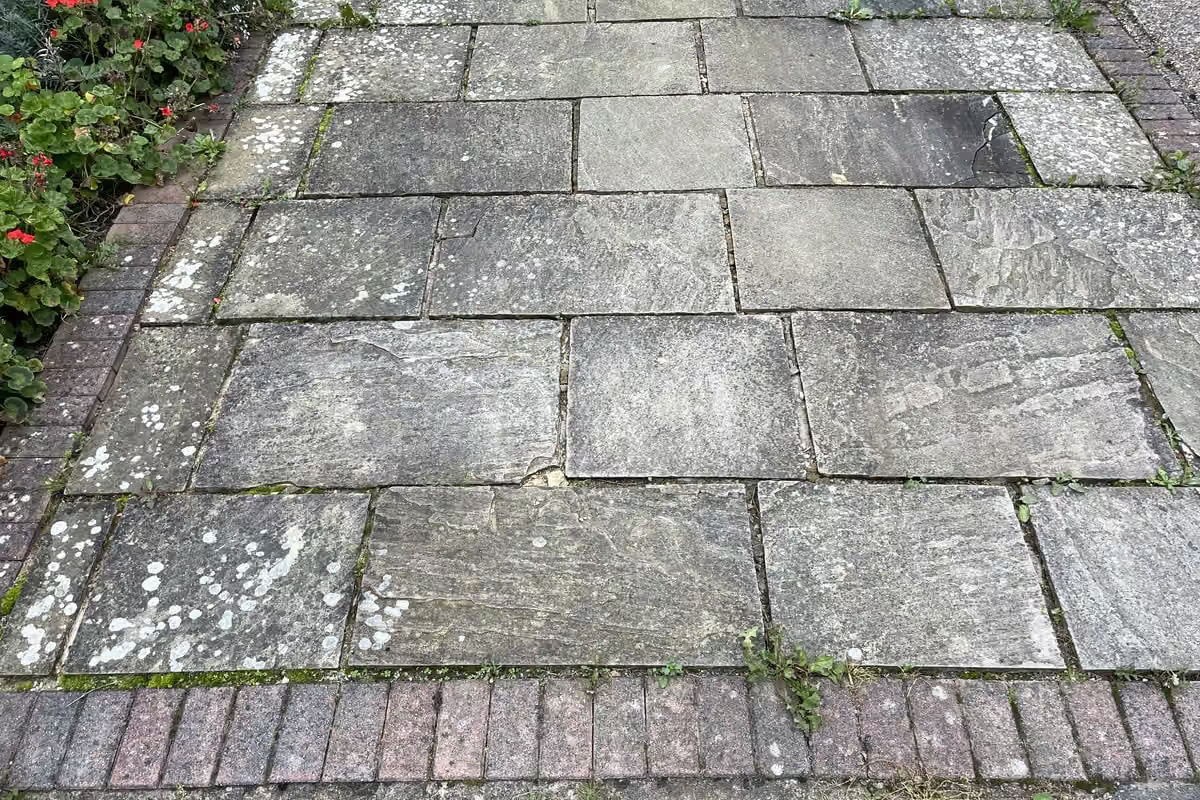
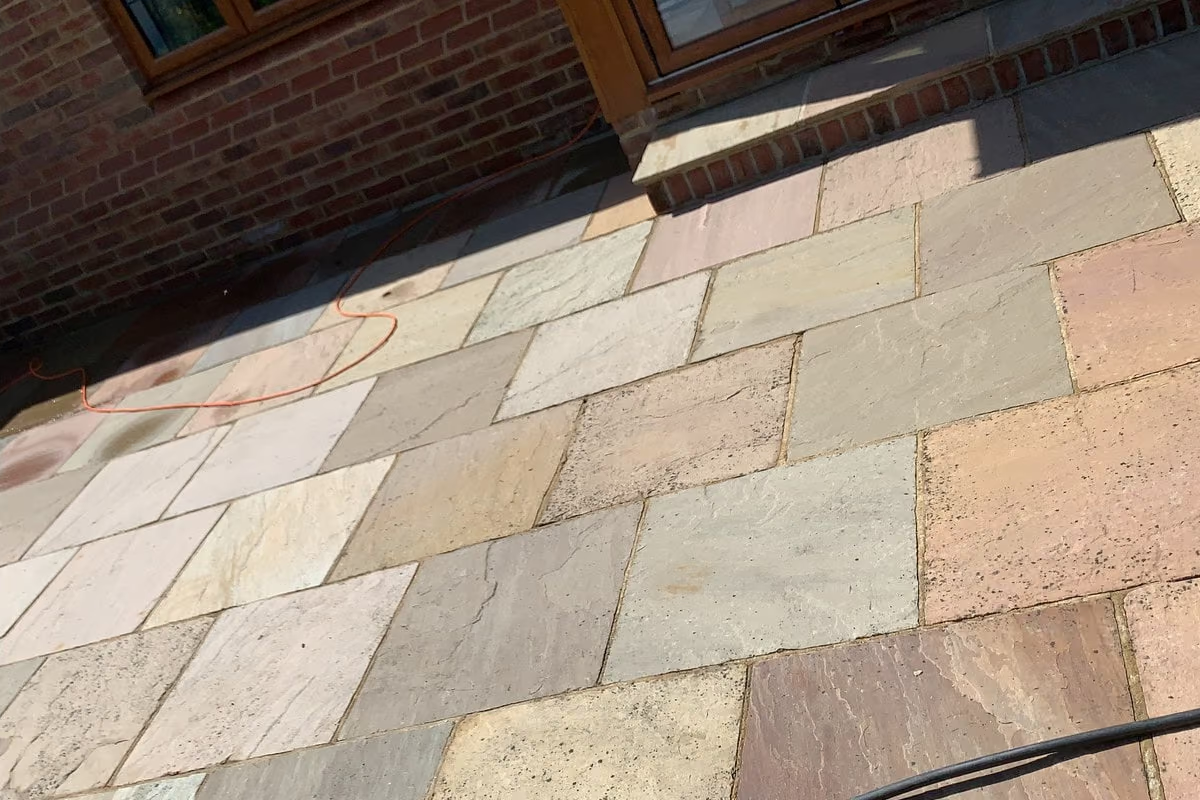
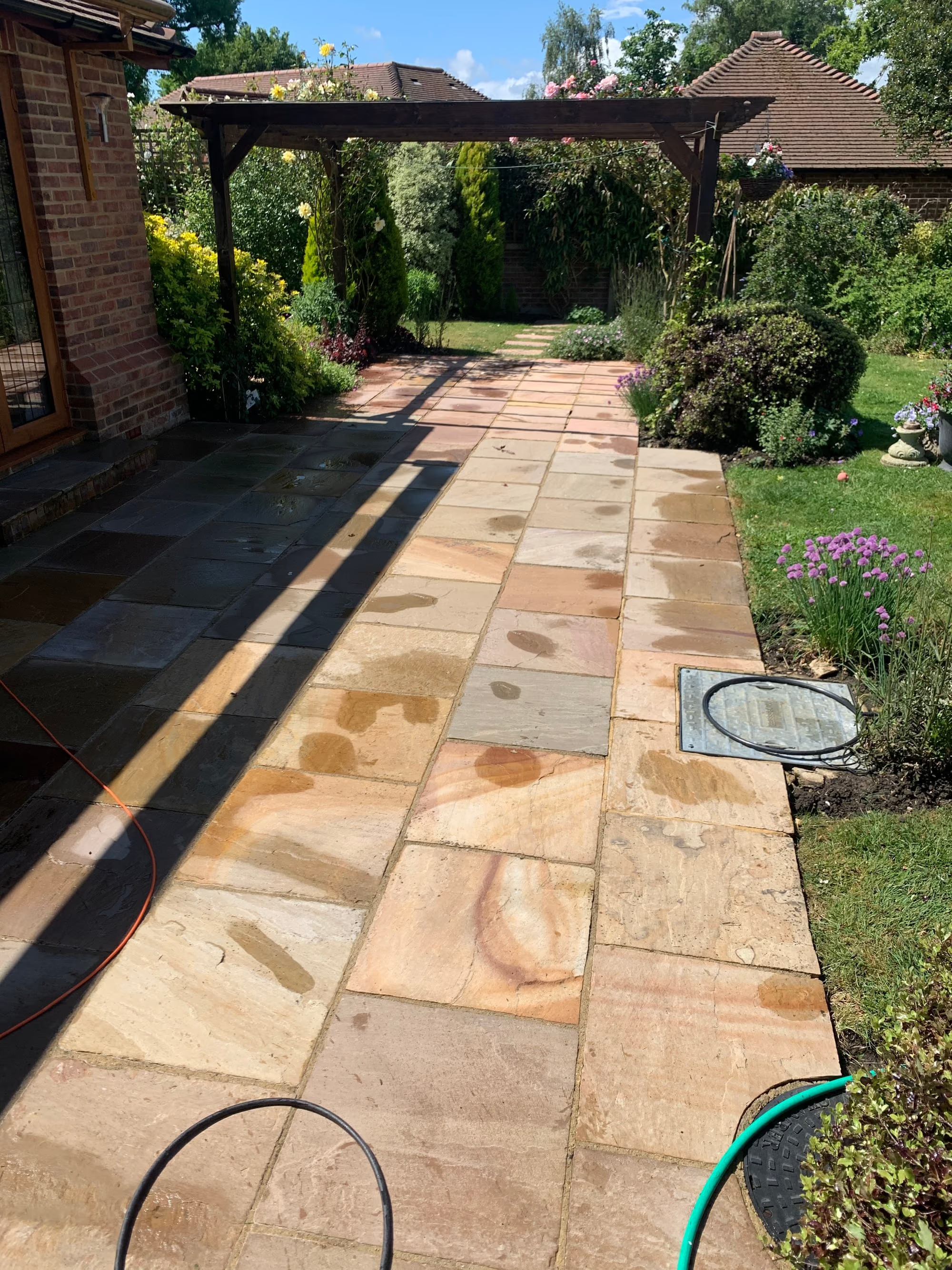
What a clean actually looks like

Questions
Asked in Alfriston
My cottage path is old brick and some of it is crumbling. Should it be cleaned at all?
Probably not with a machine. Old handmade brick that has started to spall has lost its fire skin, the hard outer surface formed in the kiln, and underneath that it is soft and porous. Pressure takes material off every pass. What usually works is a biocide to kill the growth, a stiff brush, and patience. I will tell you if that is the right answer for your path even though it is a smaller job for me than jet washing it would be.
Why is my patio green again by October when I had it done in May?
The valley. Alfriston sits low between two arms of the downs, so you get morning shade and evening shade and a much shorter window of direct sun than an open site a mile away. Cold air and moisture also settle in the valley floor overnight. Between them, a surface here stays damp for a large part of the day through autumn, which is the one thing algae genuinely needs. A biocide treatment after cleaning is worth more here than almost anywhere else I work.
Can you get a van down the village street?
Yes, though not always where I would like it. The street through Alfriston is narrow and busy with visitors from spring onwards, so for village-centre properties I plan an early start and work before the traffic builds. For the outlying houses and the Litlington and Milton Street lanes it is straightforward. It changes my timing, not your price.
There is moss growing on the stone itself rather than in the joints. Can that come off?
Yes, but slowly and not with pressure. Moss rooted into the surface of soft old stone is holding on inside the pores. Blasting it removes the moss and a layer of stone with it. A biocide kills it, and over the following weeks it dries out, loses its grip and brushes away. It is a slower result and it leaves you with the same stone you started with, which on hundred-year-old paving is the point.
Get a price
Send photos from Alfriston
A couple of photographs and a rough size gets you a fixed written price, usually the same day.
Sent
That is with me.
I read every one myself. If you sent photos I can usually come back with a fixed price the same day, or the next morning if it arrives late.