
I moved back to Seaford, which is why this town gets the most attention on the site and why it is the only place I will quote for a job small enough that it barely covers the morning.
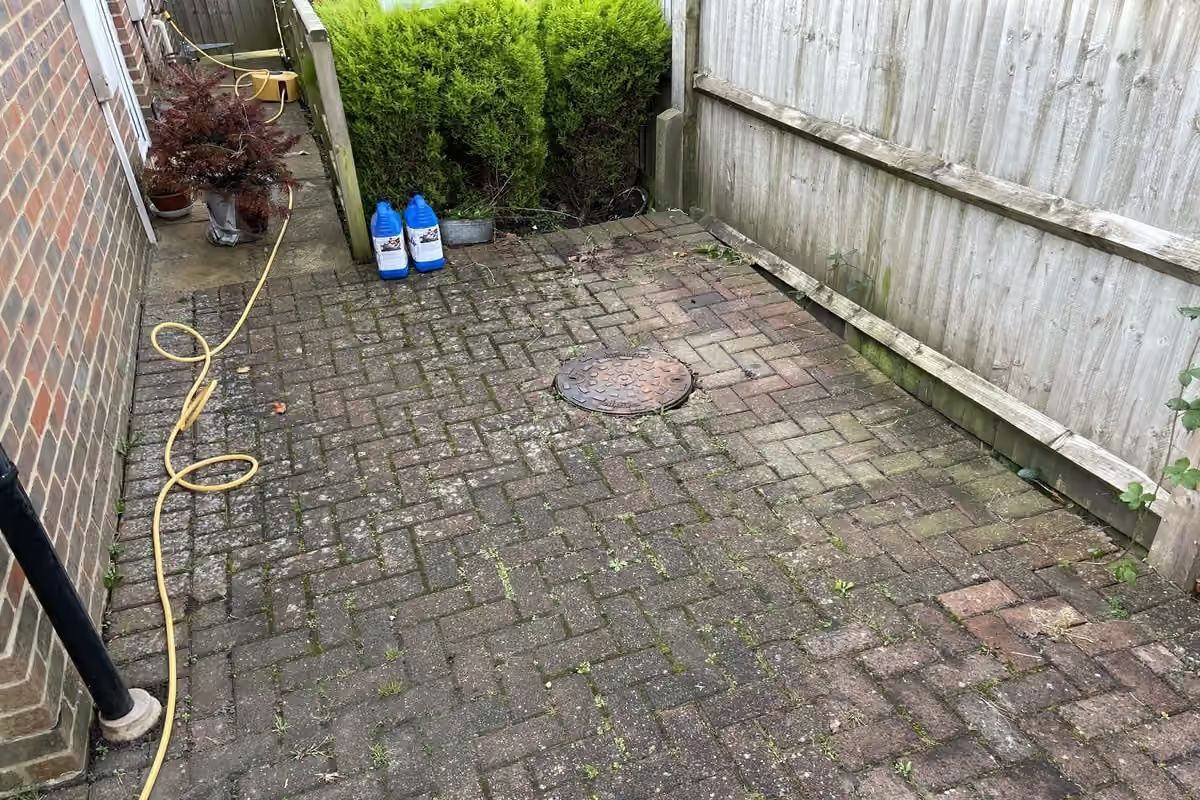
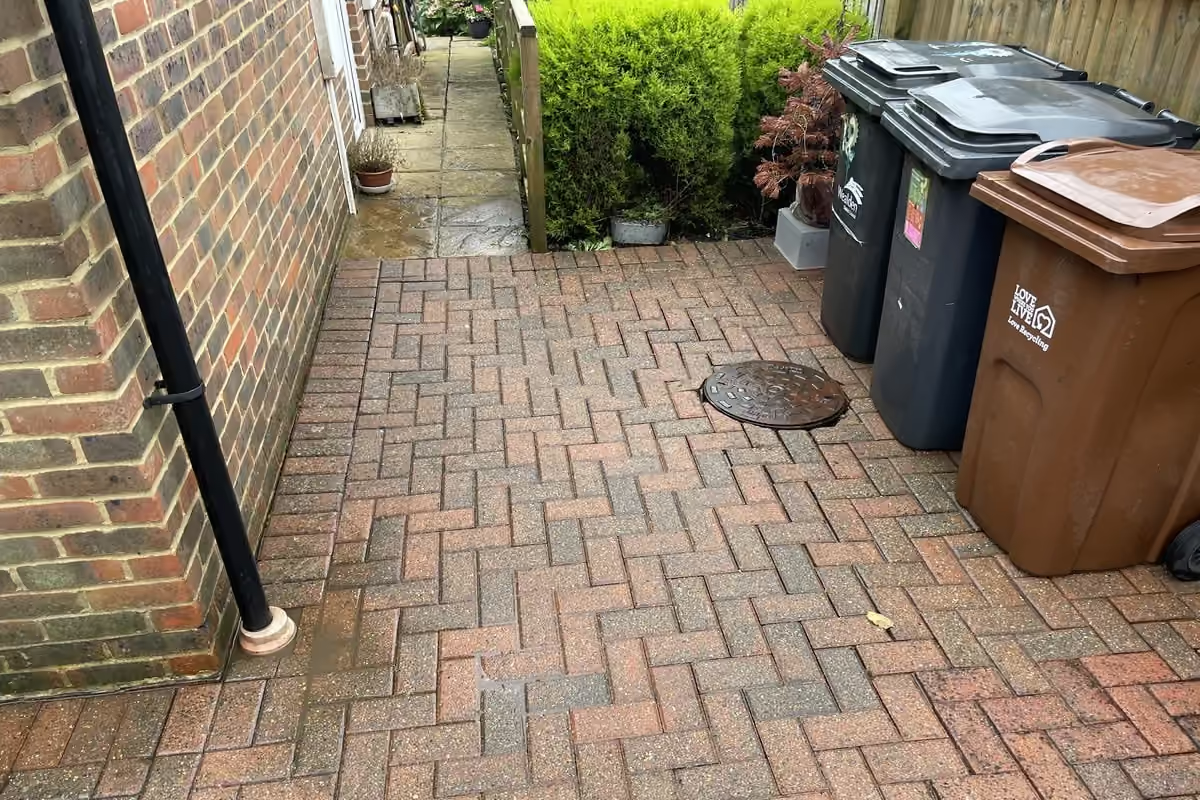
The housing here splits into three fairly distinct jobs. The bungalow belt across Chyngton and Sutton went up mostly between the 1950s and the 1970s, and those properties came with a concrete or slab driveway wide enough for one car and a path round to a back garden. Sixty years on, that original concrete has usually been supplemented or replaced with block paving, and what I get called to is a drive laid somewhere between 1995 and 2010 that has never been re-sanded.
Closer to the station and up towards East Blatchington the stock is inter-war semis with shorter, steeper front gardens, often with a slab path and a small parking area cut in later. Down towards the front the Victorian and Edwardian terraces have narrow forecourts, original tiled paths under a lot of later concrete in some cases, and back gardens reached through the house or down a shared alley.
What the sea does to your paving
The genuinely local factor here is salt, and it does two things.
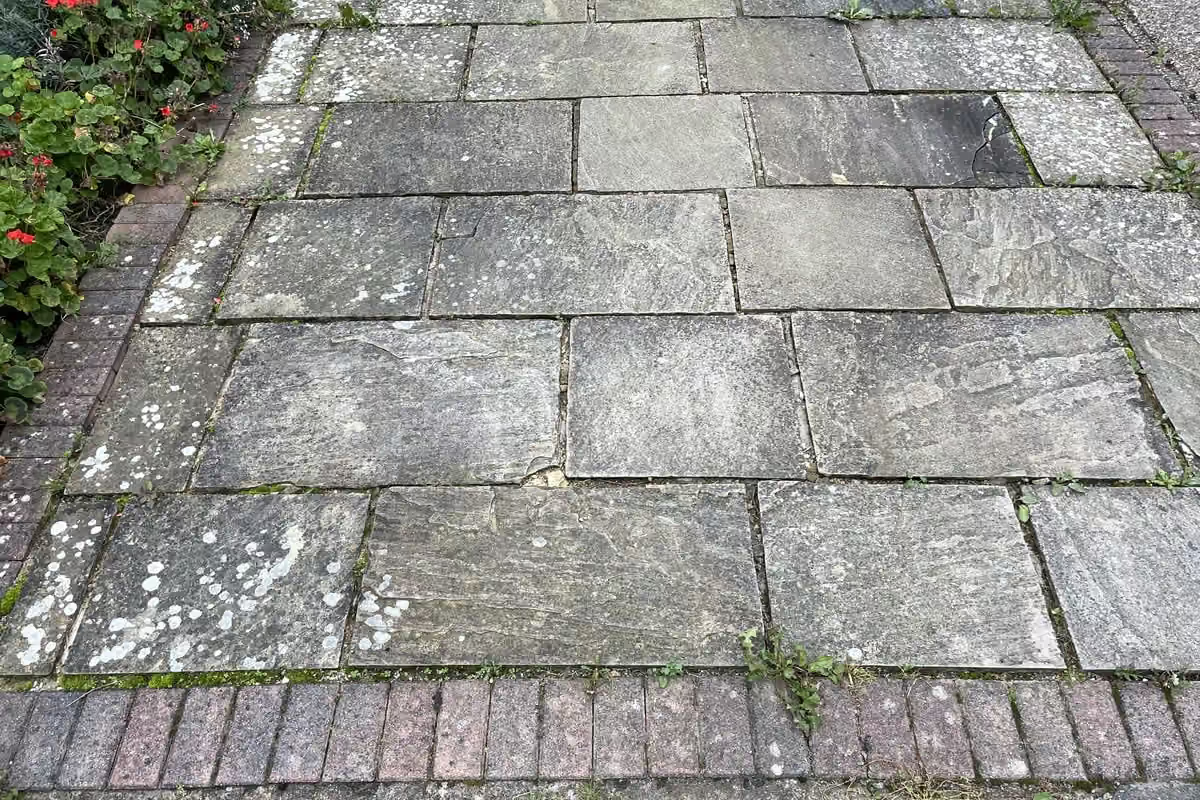
The first is straightforward chemistry. Salt crystals form in the pores of porous stone as water evaporates, and crystallisation exerts real pressure. On soft sandstone and older concrete that shows up over decades as surface friability, a slight chalkiness when you rub your hand across it. It is not something a wash causes or cures, it is just the environment your paving lives in.
The second is the one you actually see. Salt is hygroscopic. It draws moisture from the air and holds it, so a salted surface stays damp for longer after rain and picks up dew earlier in the evening. Algae needs moisture more than it needs anything else. That is why a north-facing patio in Seaford will be green again while the equivalent patio at Heathfield is still looking fine.
Exposure matters more than distance from the water. A front garden on Marine Parade takes the full weight of it. A back garden on the lee side of a house half a mile inland at Bishopstone is a much gentler environment, and the same patio in both places will need doing at quite different intervals.
What that means for the job
Two practical consequences.
Rinsing matters more here. I run a longer final rinse on coastal jobs than I would inland, because leaving salt-laden slurry to dry on the surface just puts the salt straight back.
The cleaning tier is worth more here than it is inland. On an exposed Seaford patio, taking the growth out of the surface rather than off the top of it often makes the difference between doing this every year and doing it every other year. On a small patio that is £150 against £170, which is the cheapest step on my price list that changes how often you see me.
The chalk underneath
Seaford sits on chalk, which is good news in a way most people never notice. Water drains through chalk quickly, so the settlement problems that plague paving laid on Weald clay a few miles north are rare here. I very seldom get called to a Seaford drive that has sunk. When a Seaford drive has a problem it is nearly always a surface problem, and surface problems are the ones I can actually fix.
The exception is where a drive has been laid over made ground, which happens on some of the later infill plots. If part of your drive is moving and the rest is solid, that is worth a look before anybody cleans it, because a clean surface shows a dip far more clearly than a dirty one does.
Booking
February and March are when the phone starts and April is usually full. If you want your patio done before you actually want to sit on it, ask in late winter. Being ten minutes away, I can often fit a Seaford job into a gap that would not be worth opening up for a job at Battle.
Getting here
This is home. I live and work here. Travel is my cost to carry, so the prices and the minimum charge are the same here as they are on my own street.
Villages and areas I work in around Seaford: Bishopstone, Blatchington, Chyngton, Sutton, East Blatchington, Norton. If you are somewhere not on that list but nearby, ask anyway.
The work
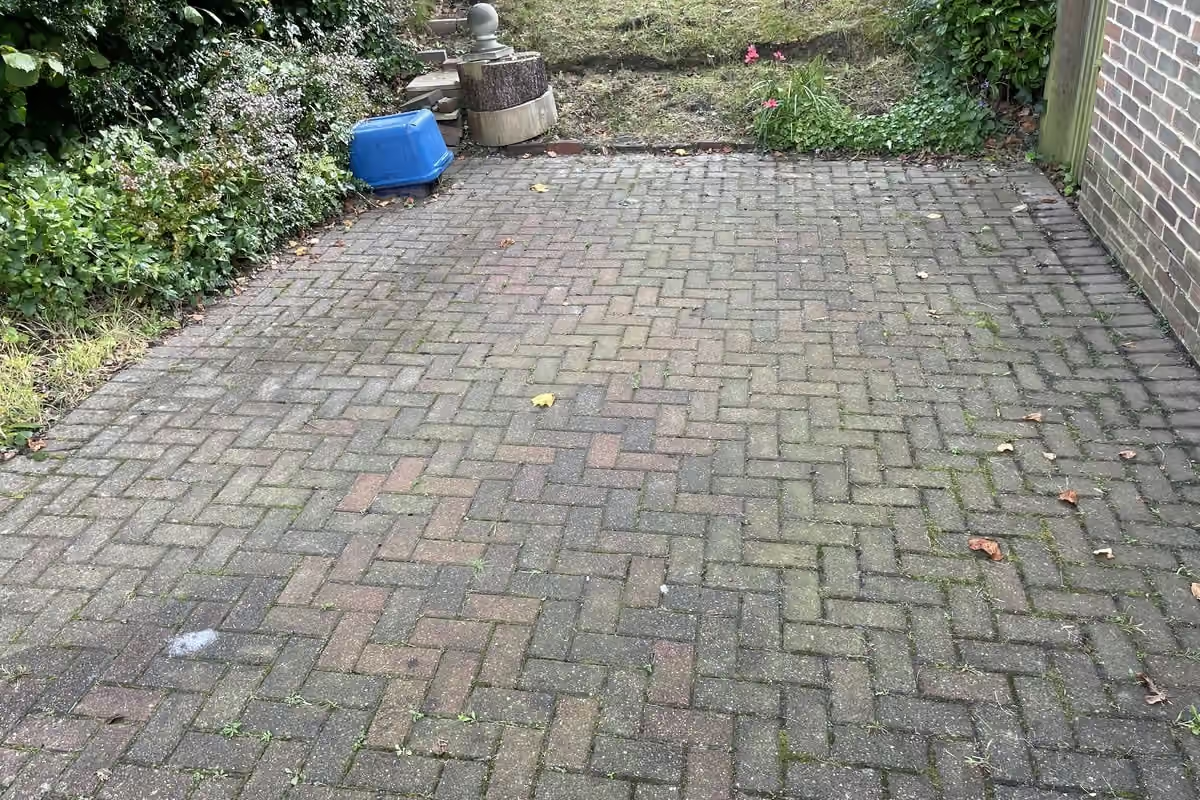
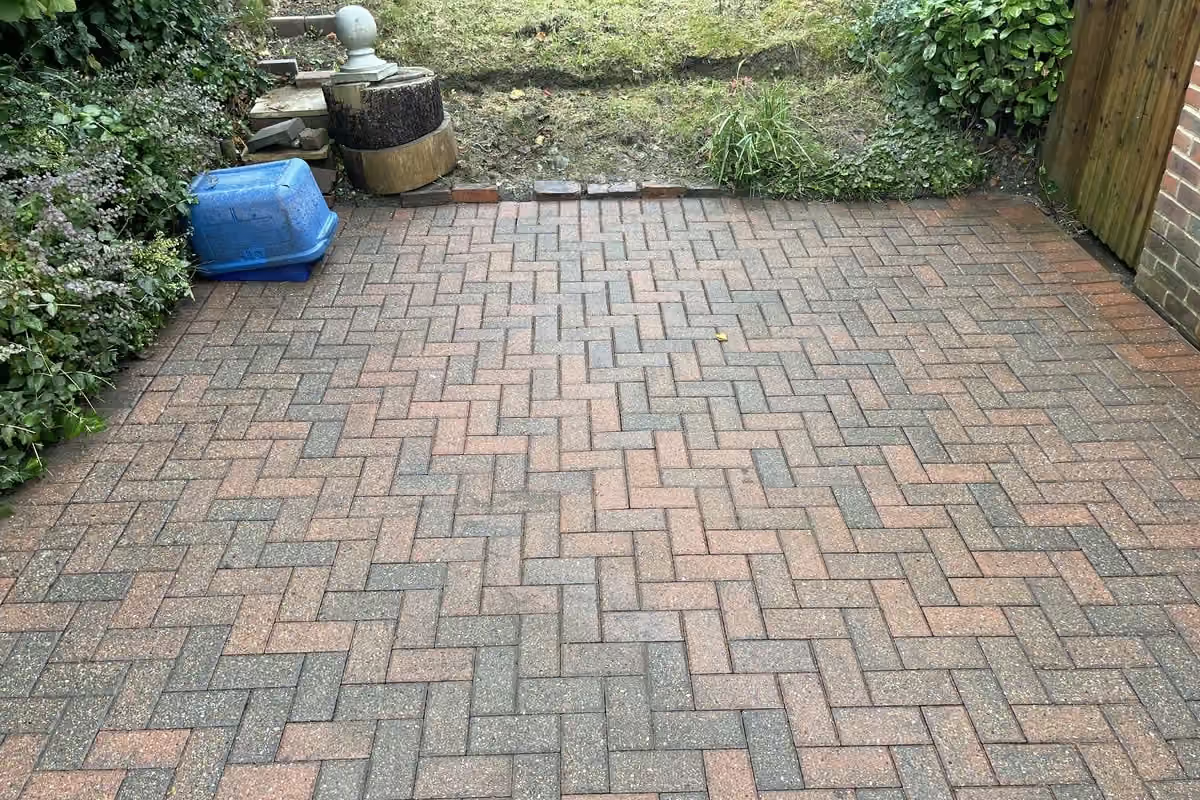
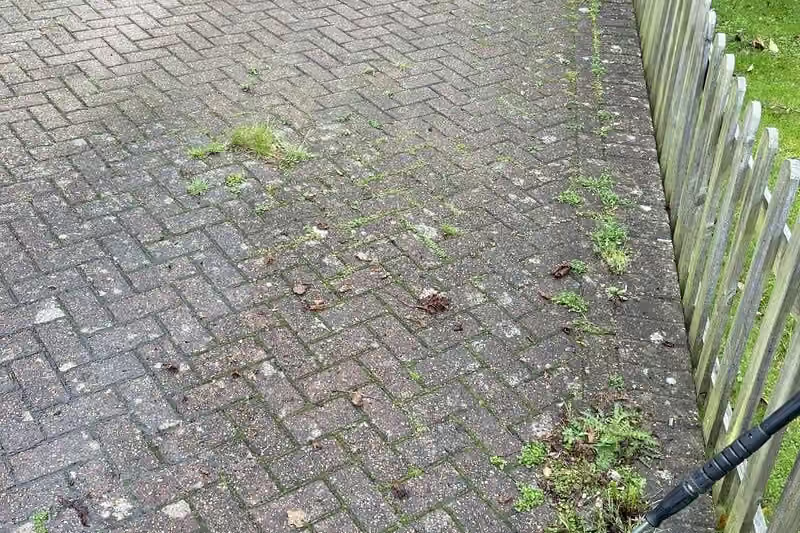
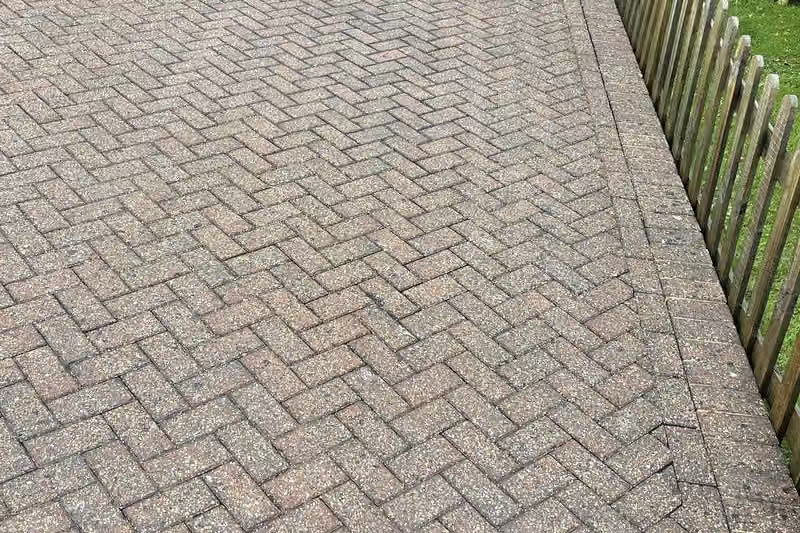
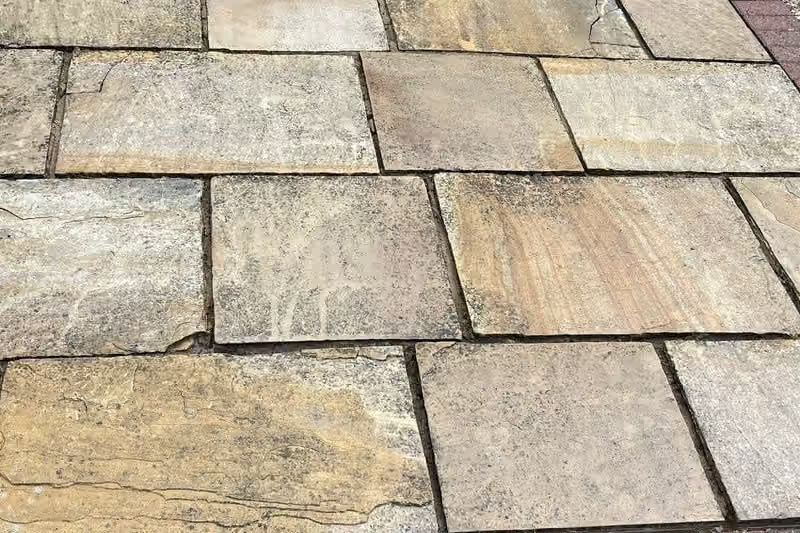
What a clean actually looks like
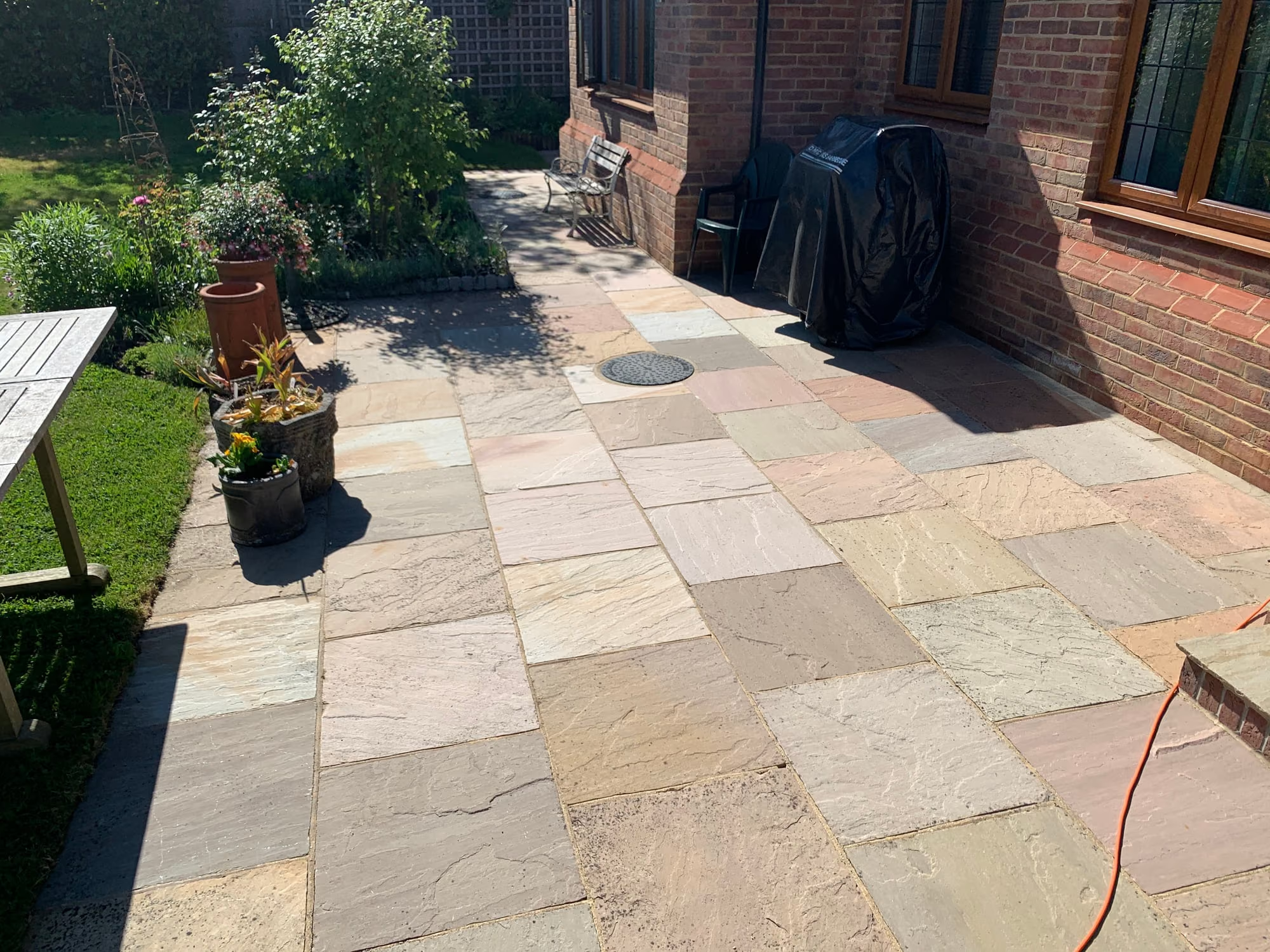
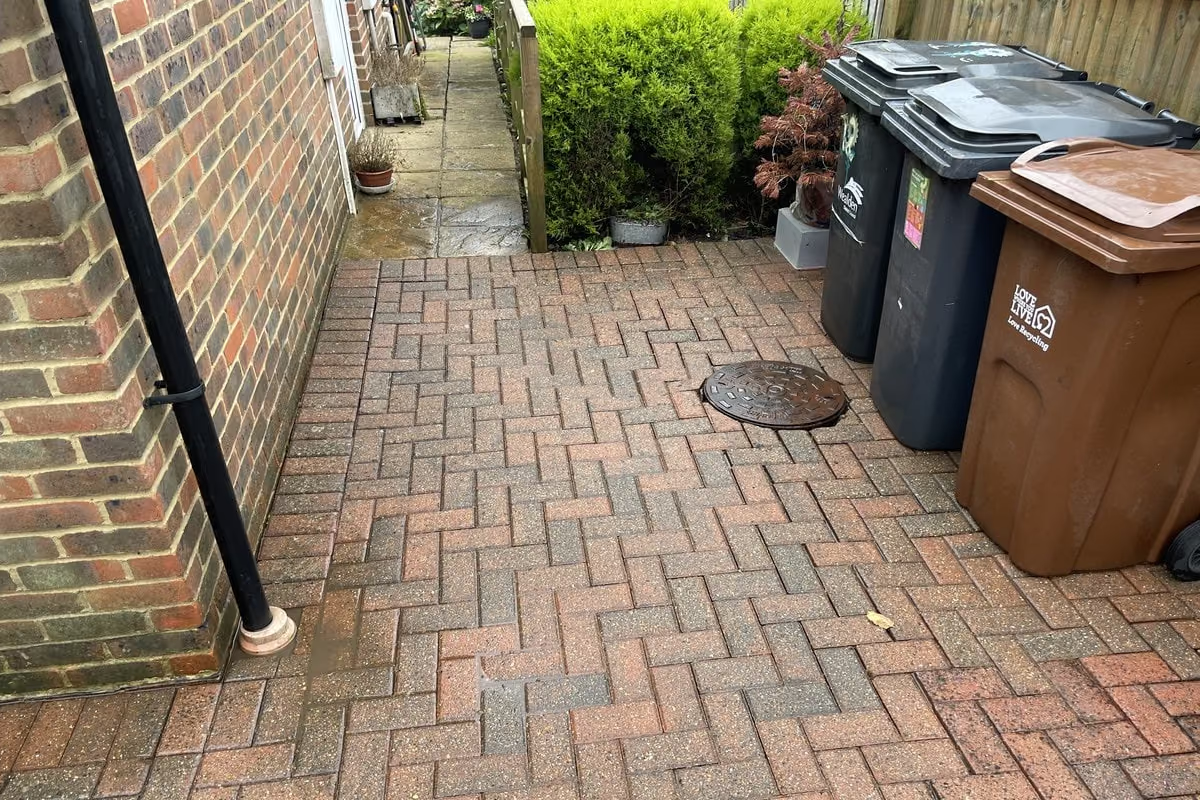
Questions
Asked in Seaford
Why does my Seaford patio go green so much faster than my sister's in Uckfield?
Salt. Fine airborne salt settles on every hard surface in this town and it is hygroscopic, meaning it pulls moisture out of the air and holds it against the stone. A patio in Seaford spends more hours of the year damp than a patio fifteen miles inland, and damp is the only thing algae really needs. It is why coastal paving greens up faster and why a biocide treatment is worth more here than it is in the Weald.
Do you charge less because you are local?
No, the rate is the same everywhere I work. What being local actually buys you is flexibility. I can drop in to look at something on my way past, I can come back the next morning to re-sand once a drive has dried, and if the weather turns on a Tuesday I can move you to Thursday without it costing me an hour of driving each way.
My bungalow drive is concrete with a slab path. Is that two prices?
One price for the lot. Most of the Chyngton and Sutton bungalows have a drive and a path that together come to somewhere between a small patio and a single drive, which puts a good many of them between the £150 minimum and £200. Send the two rough sizes and I will tell you which side of it you land on.
Can you get to the front at a seafront property without blocking the road?
Usually. The van needs to be within about 30 metres of the job for the hose run, and on the seafront terraces that generally means a spot on the road for a few hours. If parking is genuinely impossible I will say so when you send photographs rather than turning up and discovering it, and we can plan around a permit day or an early start.
Get a price
Send photos from Seaford
A couple of photographs and a rough size gets you a fixed written price, usually the same day.
Sent
That is with me.
I read every one myself. If you sent photos I can usually come back with a fixed price the same day, or the next morning if it arrives late.