Driveway & Patio Cleaning in Ringmer
Long shared drives, generous plots, and a strip under the trees that goes green months before the rest of the surface does. Ringmer is where shade dictates the job.
- Distance
- 12 miles
- Drive
- 24 min
- Postcode
- BN8
- Rate
- from £4.50/m²
Ringmer is a village that grew outwards rather than upwards, and the shape of the work here follows from that.
Plots are generous. Drives are long, often shared between two or three houses, and frequently a combination of surfaces: a gravel section near the road, block or slab where the cars actually stand, and a path round to the back. Mature trees are everywhere, planted when the houses were built in the 1960s and 70s and now considerably larger than anybody anticipated.
Shade is the controlling factor
On most of my jobs the whole surface is in roughly the same condition. In Ringmer it very often is not.
A long drive running out from under a stand of trees will be dark green and slippery for the first ten metres and comparatively clean twenty metres further on. Same paving, same age, same rain. The only variable is hours of direct sun.
Algae needs moisture, and shade means a surface that took a shower at four in the afternoon is still damp at nine the next morning. Extend that over an autumn and the shaded strip has had several hundred more damp hours than the open section.
The practical consequence is that Ringmer drives need cleaning on the schedule of their worst section rather than their average. If the shaded end is unpleasant underfoot in November, the drive needed doing whatever the sunny end looks like.
Leaf tannin, which is not algae
The other thing trees give you is tannin staining, and it is worth distinguishing because it responds differently.
Wet leaves left on paving leach tannins into porous stone and concrete, leaving brown or rust coloured marks in the shape of the leaves. That is a stain in the material, not growth on top of it. A biocide does nothing to it. Pressure lifts some of it and will not take it all.
On light coloured sandstone and concrete, heavy tannin marking often needs a dedicated treatment and even then may only lighten. I will tell you before I start which marks I expect to remove and which I expect to fade, because the alternative is you looking at the finished drive wondering why the brown patches are still there.
Clearing leaves promptly in autumn is worth more than anything I can sell you.
Off the chalk and onto clay
Ringmer sits north of the downs on Weald clay, and it is the first town on my list where the ground genuinely changes the paving.
Clay shrinks as it dries and swells as it wets, and it does so seasonally with a fair amount of movement. Paving laid on a proper compacted sub-base copes. Paving laid straight onto clay, which was common enough in the 1960s and 70s, moves with the ground beneath it.
That shows up as slabs that rock in winter and sit flat in high summer, and as joints that open and close over the year. It is not a cleaning problem and cleaning will not affect it, but it does mean I am more careful about pressure near an edge that is already loose.
Clay also drains slowly, so surfaces stay wet longer after rain, and re-sanding a Ringmer drive in winter usually means a return visit once it is dry enough for the sand to travel.
Shared drives are worth organising
Because my setup time and hose run are the same whether I clean 40 or 120 square metres, a shared drive done in one visit is meaningfully better value than three separate jobs. If your neighbours have been talking about getting it done, it is worth doing together.
Around the village
Laughton, Barcombe, Isfield, Broyle Side and the Glyndebourne lanes are the same working area and the same rate.
What it costs
Slabs and concrete £4.50 a square metre, block paving £5.50 including re-sanding, natural stone £5. Moss and algae treatment £1.50, which on a shaded Ringmer drive is the most useful pound and a half on my price list. Minimum job £150.
Getting here
12 road miles from Seaford, about 24 minutes via the A26 to Lewes then the B2192. Travel is my cost to carry, so the square metre rate and the minimum charge are the same here as they are on my own street.
Villages and areas I work in around Ringmer: Glyndebourne, Laughton, Barcombe, Isfield, Broyle Side. If you are somewhere not on that list but nearby, ask anyway.
The work
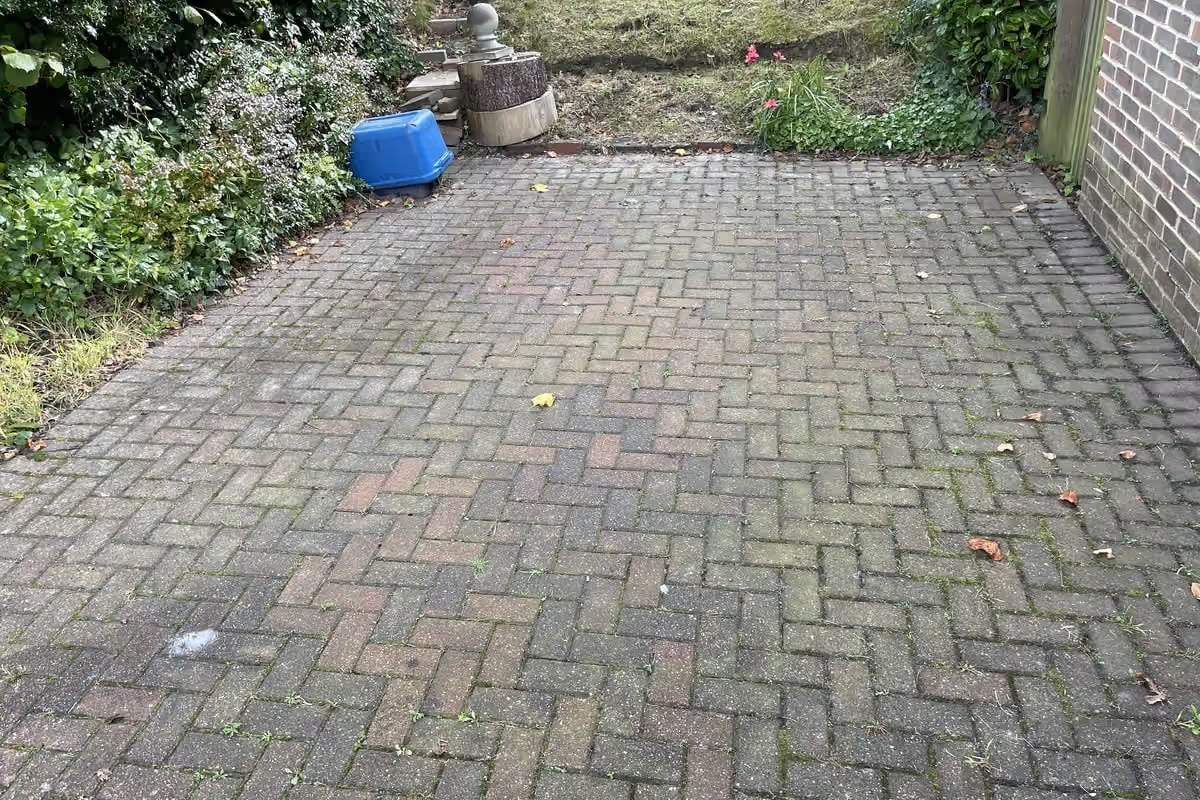
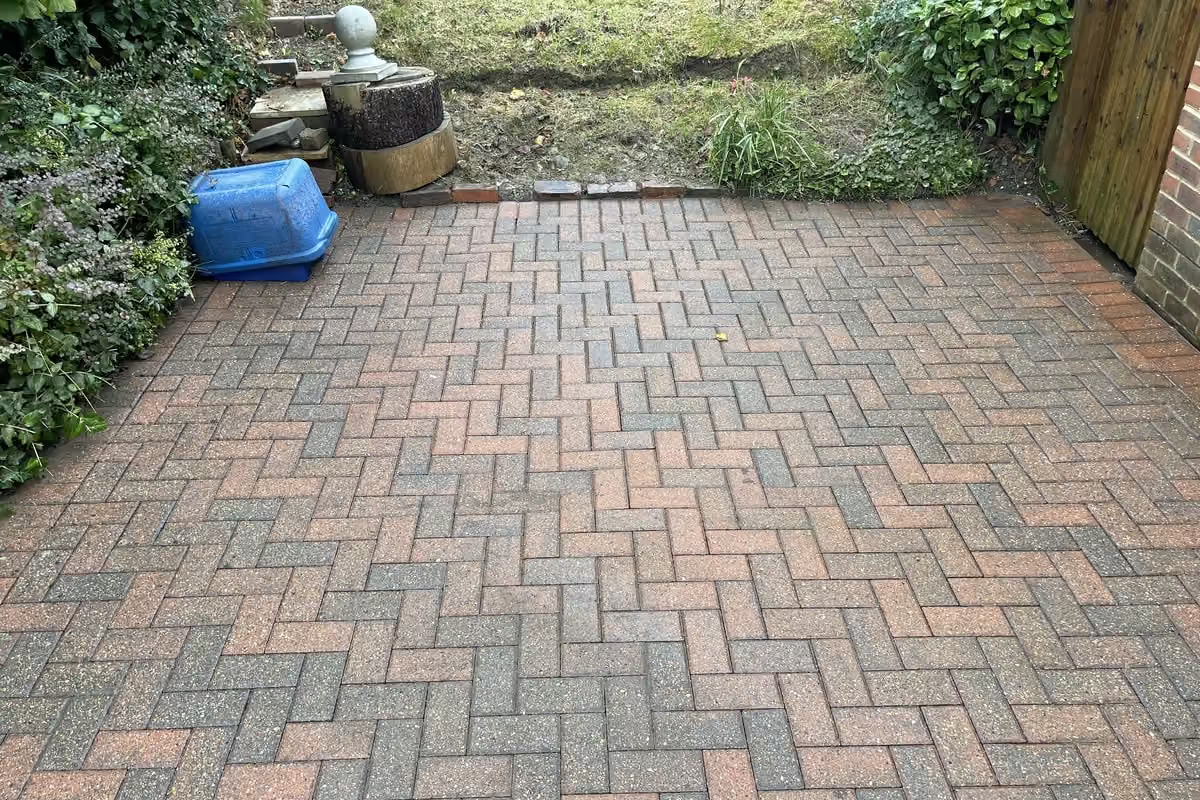
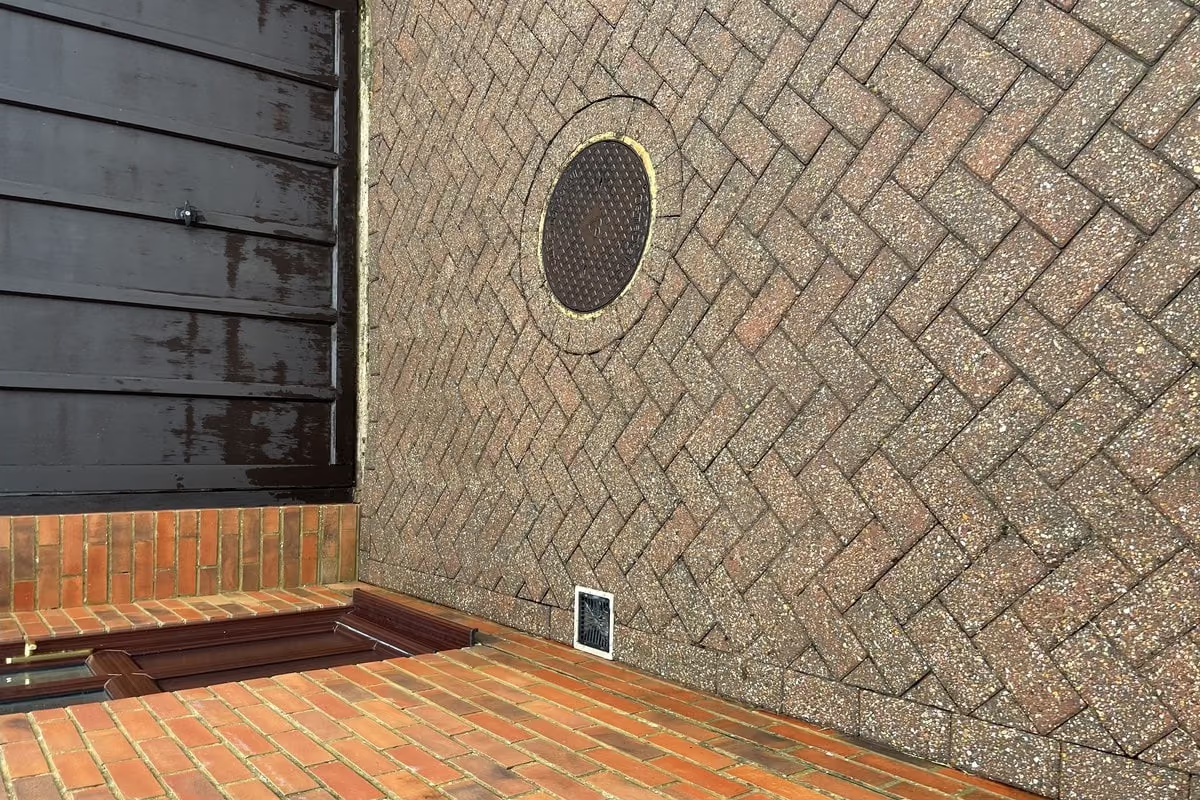
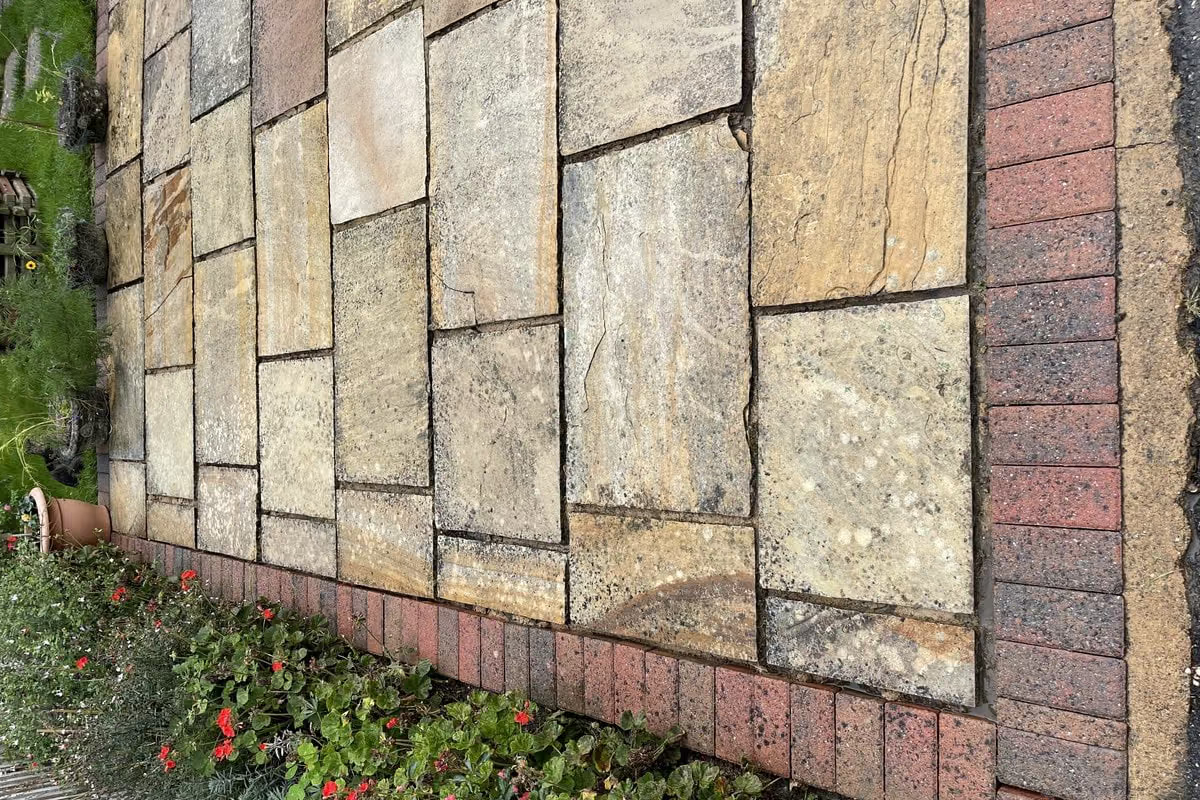
What a clean actually looks like
Questions
Asked in Ringmer
Only part of my drive is green. Do I pay for the whole thing?
You pay for the area I clean, and it is nearly always worth doing the lot. A drive cleaned in patches looks worse than one left alone, because the eye reads the boundary between clean and dirty as a stain. What I will do is discuss where to stop, so if the far end past the gate genuinely never gets used we can leave it out and put the money into the part you see.
My drive is shared with two neighbours. How does that work?
Easily, and usually cheaper for all of you. I quote the whole area and you split it however you like. Because the setup and the hose run are the same whether I clean 40 square metres or 120, a shared drive done in one visit costs each household less than three separate jobs would. Somebody needs to be the point of contact and somebody needs to move the cars.
There is a lot of gravel. Can that be cleaned?
Not really, and I would rather say so. Loose gravel cannot be jet washed because the water throws it everywhere and you end up with clean stones in your flowerbed. What can be done is cleaning any slab or block sections within a gravel drive, and clearing the weeds and moss at the edges where gravel meets a hard surface. If gravel has gone green through the whole depth it usually needs topping up rather than cleaning.
Does the clay ground here cause problems with paving?
It does, and it is the main difference between Ringmer and the chalk towns nearer the coast. Weald clay shrinks in dry summers and swells when wet, so paving laid straight onto it without an adequate sub-base moves seasonally. You get slabs that rock in February and sit flat in August. Cleaning has no effect on that either way, and if I see it I will tell you what is causing it rather than leaving you to worry.
Get a price
Send photos from Ringmer
A couple of photographs and a rough size gets you a fixed written price, usually the same day.
Sent
That is with me.
I read every one myself. If you sent photos I can usually come back with a fixed price the same day, or the next morning if it arrives late.