Driveway & Patio Cleaning in Polegate
Estate housing from the 1970s and 80s, much of it block paved from new. Those drives are now forty years old and a lot of them are still on their original sand.
- Distance
- 10 miles
- Drive
- 20 min
- Postcode
- BN26
- Rate
- from £4.50/m²
Polegate is where I do more re-sanding than cleaning, in the sense that the sand is the part of the job that actually matters.
The town expanded substantially through the 1970s and 1980s, and unlike the older stock at Seaford or Lewes, a great many of those houses were built with block paved frontages from new rather than having them added later. That is unusual and it produces a specific situation: a large number of drives all laid within a decade of each other, now all around forty years old, and a good proportion of them still working on the sand that went in when they were built.
Forty years of joints
The joint sand in block paving is not filler. It is what makes the surface work.
Each block transfers load sideways into its neighbours through the packed sand between them, which spreads the weight of a car across a wide area of the sub-base. That is the whole engineering idea behind flexible paving, and it depends entirely on the joints being full.
Over forty years, sand goes. Rain washes the top of it out. A jet washer, if anyone has been at it with a lance, takes considerably more. Nobody puts it back because nobody tells them to.
The symptoms arrive in order. First weeds, because an empty joint is a seed bed. Then the blocks start to rock slightly underfoot. Then edges chip where blocks knock against each other under load. Then, usually at the entrance where cars turn, the pattern starts to creep visibly out of line.
By the time I am standing on a Polegate drive, most of them are at stage two or three. Refilling the joints properly stops the progression, and on a lot of drives it stops the rocking outright.
Ground that holds water
Polegate sits where the chalk of the downs runs out into the flatter, heavier ground on the edge of the Pevensey Levels. It is not the sticky Weald clay you get further north around Uckfield, but it is a long way from the free-draining chalk under Seaford.
The practical effect is drying time. A Polegate drive washed on a February morning will not be dry enough to take sand that afternoon, and I will usually plan a return visit rather than brush damp sand across a wet surface and leave you with joints that are full for the top centimetre and hollow underneath.
In summer it is a non-issue. Between November and March, expect the job to be split across two visits, and that is included in the price rather than charged as a second call-out.
The estates, specifically
The 1970s and 80s estates south and east of the station are the bulk of the work: block paved frontages, typically 30 to 40 square metres, usually with a path down one side. The newer development on the fringes has smaller, tidier drives that need less doing.
Older properties along the original village street have more variety and occasionally something worth being careful with, like old brick paving or a stone step that predates everything around it.
What it costs
Block paving is £5.50 a square metre with the kiln-dried re-sanding included, not added afterwards. A 35 square metre frontage is £192.50, and that is the whole number. On a forty-year-old drive a joint-stabilising sealer would extend how long the re-sanding lasts, but sealing is not something I offer, so it is not on the quote either.
Polegate is 10 miles and about 20 minutes from Seaford on the A27, and there is no travel charge.
Getting here
10 road miles from Seaford, about 20 minutes via the A259 then A27 east. Travel is my cost to carry, so the square metre rate and the minimum charge are the same here as they are on my own street.
Villages and areas I work in around Polegate: Willingdon, Wannock, Jevington, Filching. If you are somewhere not on that list but nearby, ask anyway.
The work
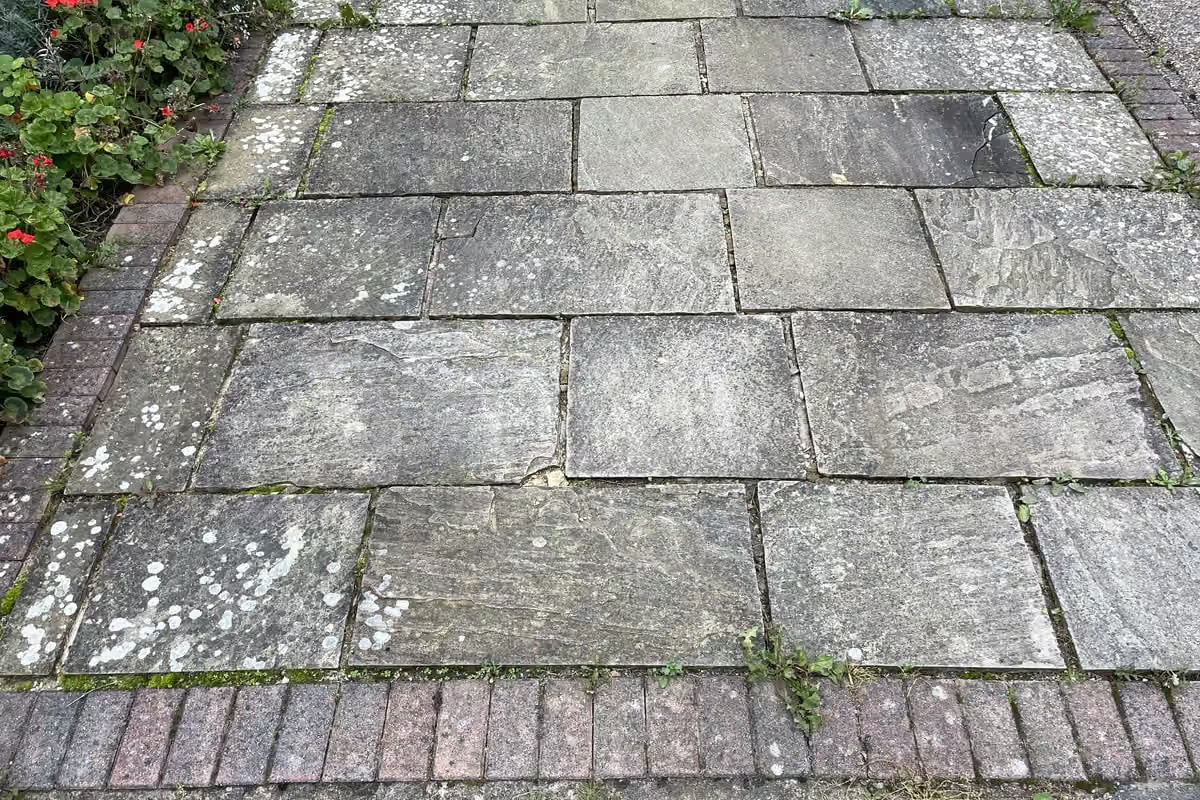
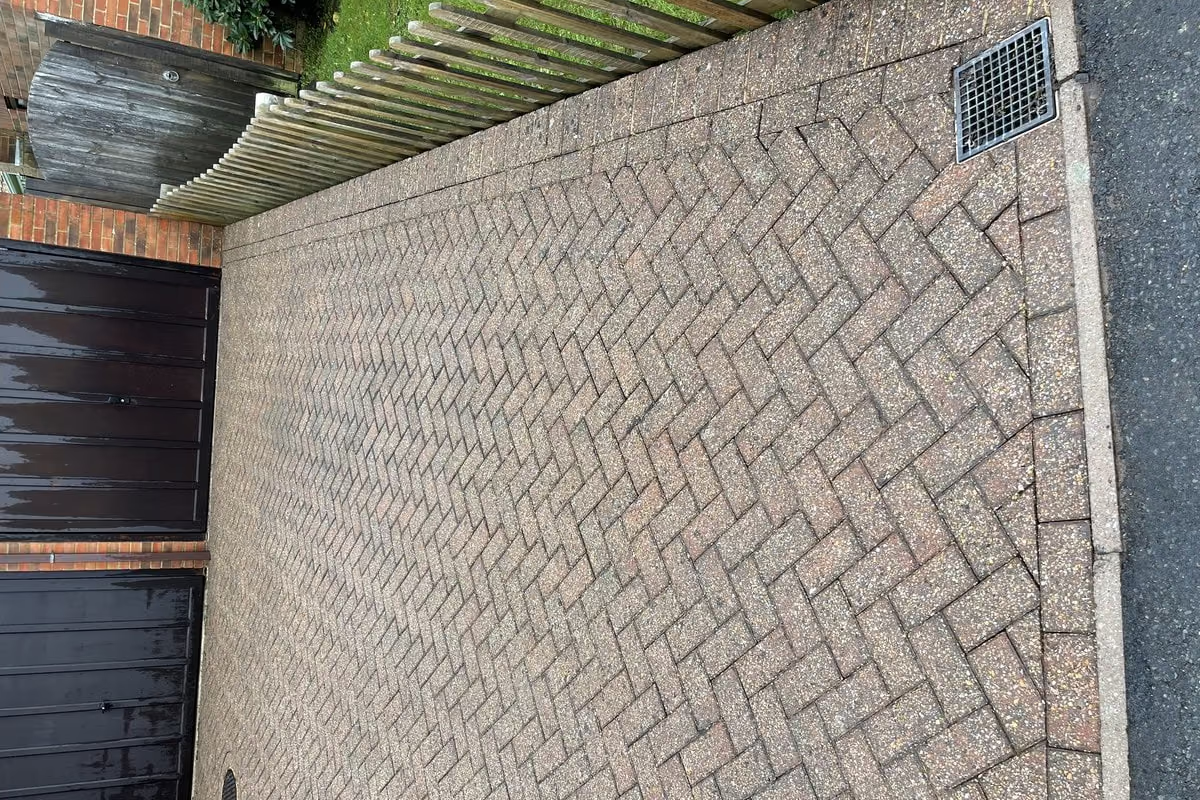
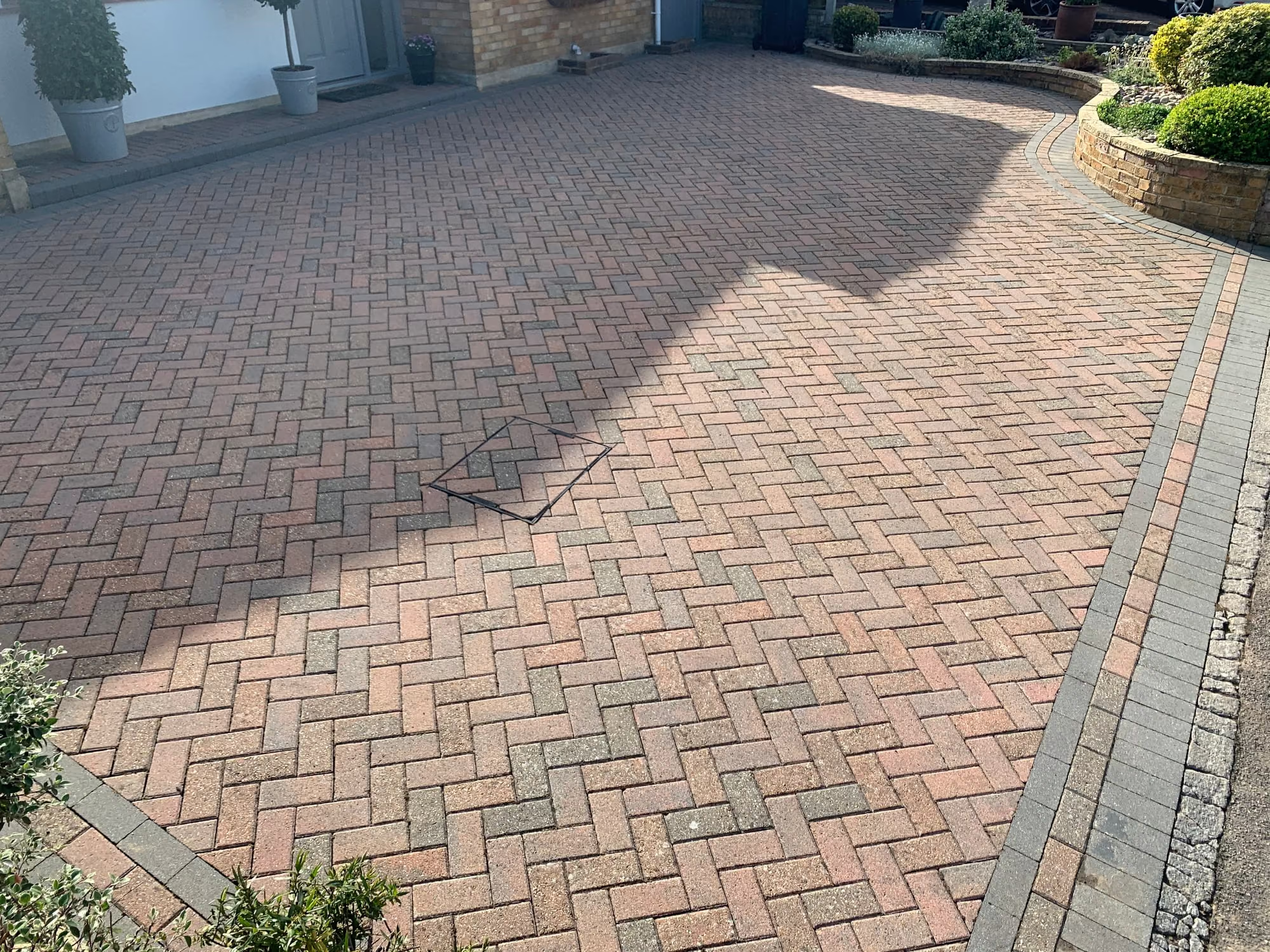
What a clean actually looks like

Questions
Asked in Polegate
My blocks rock slightly when I walk on them. Is cleaning going to fix that?
Cleaning will not fix it but re-sanding might. Rocking means the joints have emptied and each block is bearing on its own instead of sharing load with its neighbours. Refilling the joints properly with kiln-dried sand restores the interlock and in a lot of cases the movement stops. If it does not, the sand underneath has migrated and the affected area needs lifting and re-laying, which is a separate job I will describe honestly rather than pretend a wash will sort.
Some of my blocks have sunk near the entrance. What causes that?
Turning. The entrance takes the most load and the most twisting force from tyres, so it is always the first place a drive shows movement. A shallow dip is usually a bedding problem and can be lifted, re-screeded and put back. A wider settled area means the sub-base has failed and water is probably getting somewhere it should not, and that needs a groundworker. Cleaning makes both more visible rather than less, which is worth knowing before I start.
The drive was laid in the 1980s. Will the colour come back?
Some of it. Pigment runs through the body of most blocks of that era, but the top few millimetres take forty years of UV and tyres, so a red block is now a lighter red than it was new. What cleaning removes is the grey biological film sitting on top, and underneath it there is usually a lot more colour than people expect. It will not look like a new drive and I would rather say that than let you be disappointed.
Do you cover Willingdon and Wannock too?
Yes, both, along with Jevington and the lanes out towards Filching. They are a few minutes further on and the price is identical. Wannock and the Jevington side sit at the foot of the downs and get more tree cover than Polegate itself, which in practice means more leaf mulch in the joints and a bit more tannin staining to deal with.
Get a price
Send photos from Polegate
A couple of photographs and a rough size gets you a fixed written price, usually the same day.
Sent
That is with me.
I read every one myself. If you sent photos I can usually come back with a fixed price the same day, or the next morning if it arrives late.