Does Jet Washing Damage Block Paving?
Yes, it can, and here is exactly how: joint sand blow-out, surface pitting, and the nozzle, pressure and standoff choices that decide which you get.
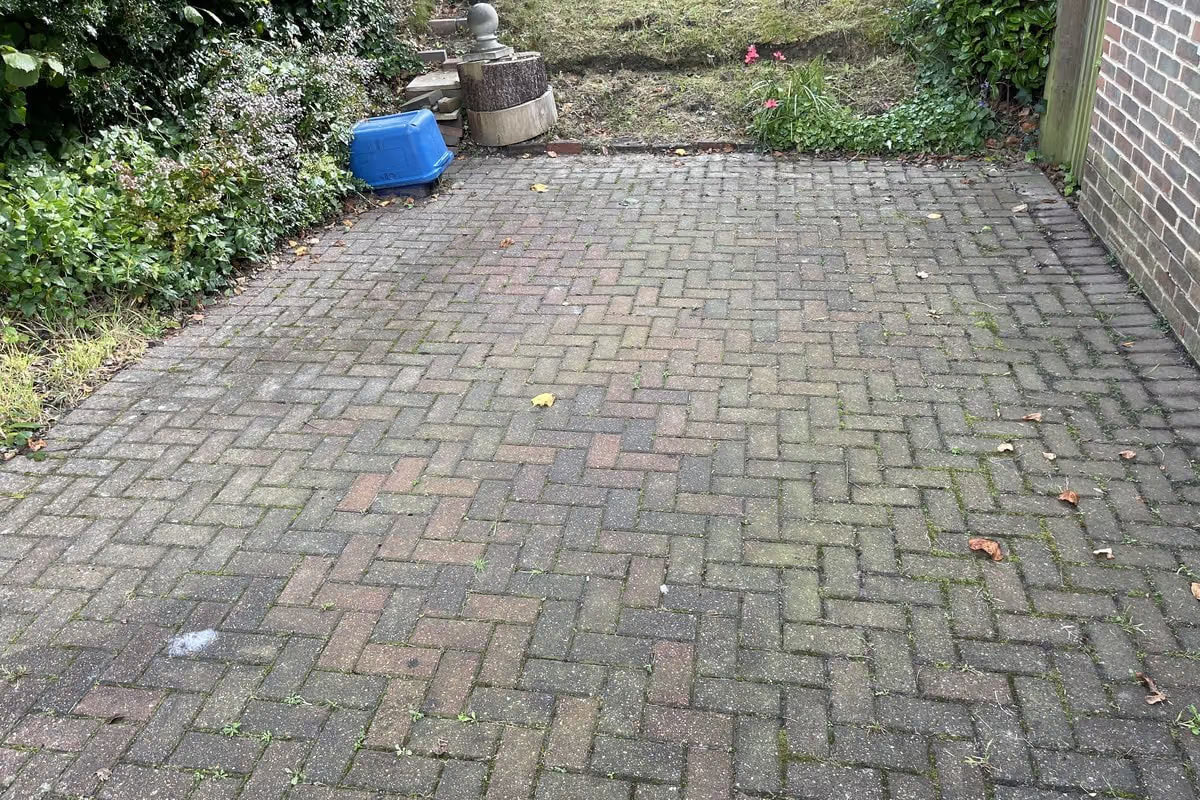
Yes. It can, and a good deal of the damage I get asked to look at was done by somebody with a pressure washer and good intentions.
That is the honest answer, and it is more useful than the reassuring one, because the damage is entirely avoidable once you know what causes it.
The two ways block paving gets damaged
Joint sand blow-out. The obvious one, and the one that matters most.
The sand packed between blocks is structural. It transfers load sideways from one block to its neighbours, which is the entire reason a few hundred loose blocks can carry a car. A high pressure jet held close will strip a joint 20 or 30 millimetres deep in one pass.
That is not damage you see immediately. The drive looks better than it has in years. What follows over the next twelve to twenty-four months is weeds, because an empty joint is a seed bed, then blocks that rock underfoot, then chipped edges where blocks knock together under load, then a laying pattern that has visibly crept out of line near the entrance.
By far the most common failure in this trade is not cleaning too hard. It is cleaning correctly and then not putting the sand back.
Surface erosion. The less obvious one.
Concrete blocks are made with a denser, finer-aggregate wearing course on top of a coarser body. That top layer is a few millimetres thick and it carries the colour and the smooth face.
A zero degree turbo nozzle held close will cut through it. What you get is a pitted, open-textured surface that holds dirt in a way the original face did not, so the drive gets dirty faster from then on. Held still for even a couple of seconds, a turbo nozzle will carve a visible line into a block.
You can usually spot a drive this has happened to. The blocks look slightly furry or matte compared with a sheltered corner that was missed, and there are faint parallel arcs across the surface from the sweep of the lance.
The three numbers that decide the outcome
Whether jet washing damages your drive comes down to three things, and the machine’s rated pressure is the least important of them.
Fan angle. The spread of the jet. A zero degree turbo concentrates everything into a spinning point. A 25 or 40 degree fan spreads the same energy over a strip several times wider, so the pressure landing on any one spot is a fraction of it. Most block paving should never see anything narrower than 25 degrees.
Standoff. How far the nozzle is from the surface. Pressure falls off quickly with distance, and moving from 50mm to 200mm can drop what lands on the block by more than half. It is the cheapest control available and the first thing people abandon when they are trying to shift a stubborn mark.
Dwell. How long the jet stays in one place. Sweeping steadily removes dirt. Pausing to work on a patch removes block.
Get all three right and you can use a powerful machine safely. Get them wrong and a modest machine will still wreck a drive.
Why a surface cleaner is safer than a lance
A rotary surface cleaner is a shrouded head with two jets on a spinning bar, held at a fixed height by the housing.
It fixes standoff, because the housing sets it. It fixes dwell, because the jets are always moving. It fixes consistency, because you push it at a steady walking pace rather than swinging a lance in arcs.
It is also why professionally cleaned block paving does not have the striping you see on drives done with a lance alone. If somebody turns up to clean your drive with only a lance, that is worth a question.
The lance still has a job, on edges, along kerb courses, around drains and in corners a round head cannot reach. That work should be done at a wide fan and a long standoff.
What I do on a block paving job
Scrape thick moss off first, so the washer is cleaning paving rather than mowing.
Surface cleaner over the open area, working in one consistent direction with overlapping passes.
Lance at a wide fan for edges and detail, from further back.
Let it dry. Then kiln-dried sand, brushed in diagonally so it drops into the joints rather than skating along them, worked down, left to settle, then a second pass.
That last part is not optional and it is included in my price rather than offered afterwards.
Damage that cannot be fixed
Be clear about this before you let anybody loose with a machine.
Surface erosion on a concrete block is permanent. The wearing course does not grow back. The only remedy is replacing the blocks, and after fifteen years of weathering, new blocks will not match.
Blown pointing on any mortared edge course lets water into the sub-base, and that is a repair job.
Joint sand can be replaced, which is the good news. If somebody has cleaned your drive and left the joints empty, having them properly re-sanded now will stop the deterioration and in a lot of cases stop blocks rocking.
The straight version
Jet washing damages block paving when it is done with a turbo nozzle held too close, and it damages it more slowly and more certainly when the sand is not replaced afterwards.
Done properly, with a surface cleaner at sensible pressure and a proper re-sand, it is the correct maintenance for the surface and it will extend its life rather than shorten it.
If you are hiring somebody, two questions cover most of the risk. Do you use a rotary surface cleaner? Is re-sanding with kiln-dried sand included in the price?
How to tell whether yours has already been damaged
Worth checking before you book anybody, because it changes what you should ask for.
Find a sheltered patch. Under a permanently parked car, behind a planter, tight against a wall. Compare that block with one in the open. If the sheltered one is smoother to the hand and slightly glossier, the exposed blocks have lost surface.
Look along the drive from an upstairs window in low sun. Erosion from a swung lance shows as faint parallel arcs. Overlapping surface cleaner passes show as straight bands. Neither is visible from standing height.
Run a hand across the surface. Original blocks have a fine, tight face. Eroded blocks feel open and slightly gritty, and you can sometimes feel the individual aggregate.
Check the joints with a screwdriver. Push it into a joint. If it goes down more than about 5mm before meeting resistance, the joint is not full. On a properly sanded drive it will barely go in.
That last test is the useful one, because empty joints are fixable and eroded blocks are not.
Machine type matters less than people think
There is a lot of argument about petrol against electric and about bar ratings, and most of it misses the point.
A domestic electric washer at 130 bar with a turbo nozzle held 50mm from a block will do more damage than a professional petrol machine at 250 bar with a surface cleaner. The nozzle and the standoff dominate.
What a more powerful machine buys is speed and the ability to keep working at a long hose run. It does not buy a better result, and in the wrong hands it buys a worse one faster.
Flow rate matters more than pressure for cleaning speed. Litres per minute is what carries dirt away. Bar is what cuts. Most people fixate on the number that damages their drive and ignore the one that cleans it.
What to ask a contractor
Do you use a rotary surface cleaner? If the answer is that they work with a lance, expect striping.
Is kiln-dried re-sanding included? Not “do you re-sand”, which everyone says yes to. Whether it is in the price.
What will you do about the thick moss? The right answer involves scraping before washing.
Will you come back to sand if it does not dry? Between November and March the honest answer is yes, and it should not cost extra.
If it has already happened
Empty joints can be refilled and the movement often stops. That is worth doing straight away, because every month of rocking chips more edges.
Eroded block faces cannot be restored. A joint-stabilising sealer will help the drive hold together and slow further deterioration, and it slightly evens out the appearance, but it does not put the wearing course back.
If a contractor has damaged your drive, take photographs and raise it with them in writing before anybody else touches it. Most damage of this kind is done by people working without insurance, which is the argument for asking about it beforehand.
Get a price
Send me a couple of photos
Fixed written quote, no visit needed for most jobs, and prices you can already check on this site before you ask.
Sent
That is with me.
I read every one myself. If you sent photos I can usually come back with a fixed price the same day, or the next morning if it arrives late.