What Actually Happens When I Clean Your Driveway
Start to finish, honestly: the noise, the mess, where the water actually goes, how long each stage takes, and why the sealing has to be a second visit.
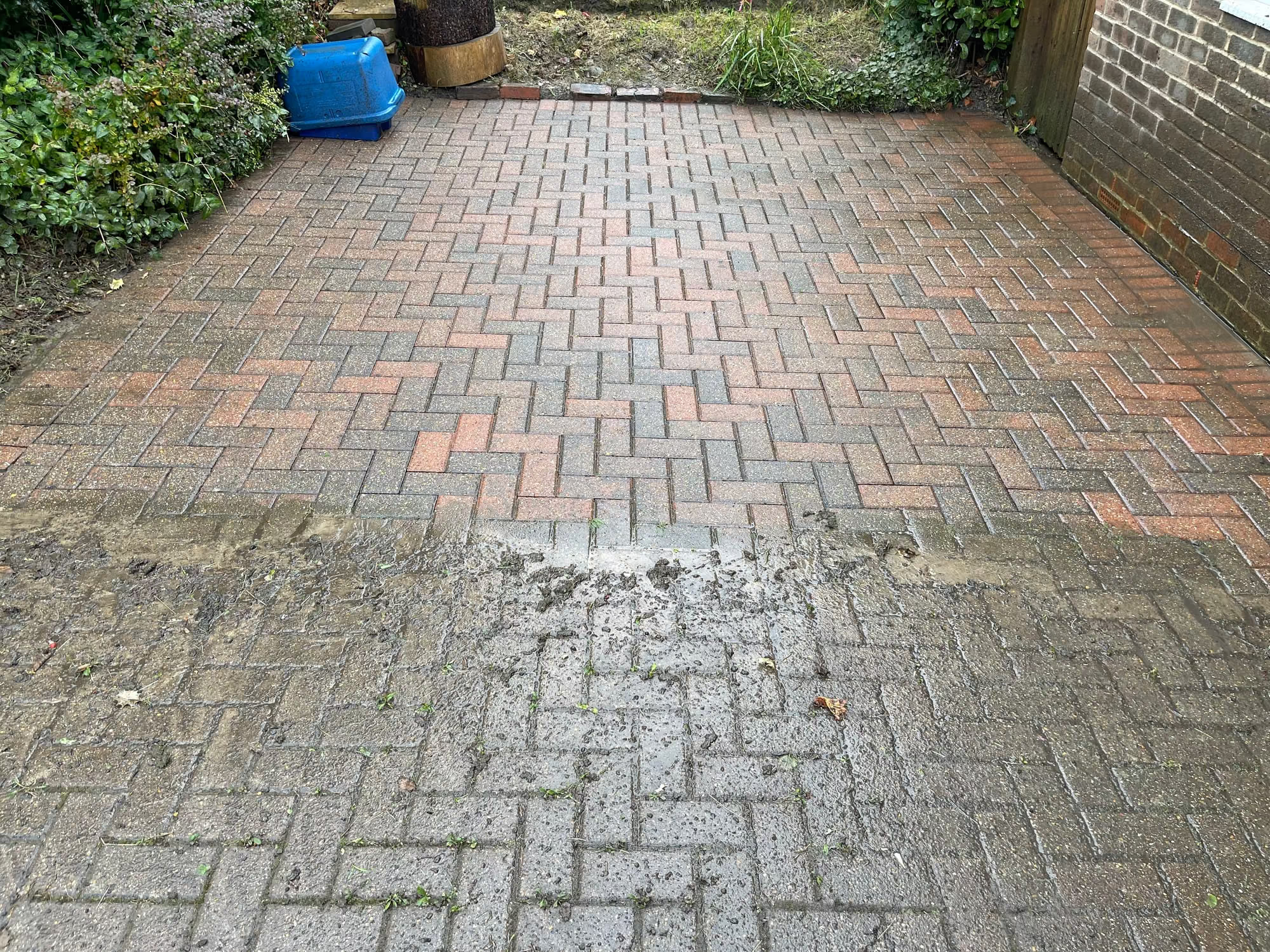
Nobody explains this, so people book a driveway clean without much idea of what their morning is going to be like. Here is the whole thing, including the parts that are not flattering.
Before the day
You will have sent me photographs and a rough size, and you will have a fixed price in writing that says what is included and roughly how long I expect to be there.
I will have asked you about an outside tap and about parking. Those two answers decide more about the day than the paving does.
What you need to do
Move the cars. All of them, off the drive and ideally not directly alongside it, because spray carries further than people expect.
Move anything loose: pots, bins, the doormat, children’s things. If it is on the drive it will get wet, and small items get moved by the water.
Close the windows on that side of the house. This one matters and people forget.
Tell me if there is anything I should not point water at. A vent, a cat flap, a section you know is loose, a border you have just planted.
That is all. You do not need to be in.
Arriving and setting up
Twenty minutes or so. Van as close as I can get it, hose run out, machine positioned somewhere it is not going to deafen you through a wall, water on and pressure checked.
I walk the drive first and look at the edges, because the edges tell you what the surface has been through. Loose blocks, failed pointing, a section that rocks, previous damage from somebody else’s turbo nozzle. If I find something that changes the job I tell you then rather than at the end.
Scraping, if it needs it
Where the moss is more than a few millimetres thick I scrape it off first, with a blade or a stiff brush, and it goes into bags.
It looks like a crude way to start a professional job. It saves an hour of standing there trying to dissolve a lawn with a jet, and it means the machine is cleaning paving instead of mowing.
Not every drive needs this. Most Heathfield ones do. Most Seaford ones do not.
The wash
This is the loud part, and I will not pretend otherwise. A petrol pressure washer is about as loud as a lawnmower and it runs continuously for several hours.
If you work from home, tell me and I will start later. If you have a baby who sleeps in the afternoon, tell me and I will plan around it. Both of those are easy and neither costs anything.
The open areas are done with a rotary surface cleaner: a shrouded head with two jets on a spinning bar, pushed at a steady walking pace with overlapping passes. That fixes the height and stops the striping you get from waving a lance about.
Edges, kerb courses, around drains and anywhere the round head cannot reach get a lance at a wide fan from further back.
A 25 square metre drive is about two hours of this. Forty square metres is three or four.
The mess, which is real
Jet washing produces a grey slurry of dirt, dead algae, sand and whatever was in the joints. There is more of it than you would think and it goes wherever the water goes.
I direct it towards a drain or a soakaway and I sweep and rinse it through before I leave. On a drive with a fall towards the road, some of it ends up in the gutter, and I clear that too.
What I cannot always avoid is some of it reaching a border, if that is genuinely the only direction the water can go. I will tell you in advance if I think that is the case rather than have you find out.
Anything nearby that has caught spray gets rinsed. Windows, the front of the house, a car parked on the road.
Halfway through, your drive will look worse than when I arrived: half clean, half filthy, covered in slurry. That is normal and it is the point in the day when people look out of the window and worry.
Drying, then the sand
Block paving joints have to be refilled, and kiln-dried sand will not run into a damp joint. It bridges at the top and leaves a void underneath, which looks finished and is not.
In summer the drive is often dry enough two or three hours later, so I go and do something else and come back.
Between November and March it usually is not, and I will come back the next dry day. That return trip is in the price. I would rather do that than brush damp sand across a wet drive and call it done.
The sand goes on dry, brushed diagonally so it drops into the joints rather than skating along them, worked down, left to settle, then a second pass. A 35 square metre drive takes three to five 25 kilogram bags if the joints were genuinely empty.
Finishing
I sweep the surplus sand off, clear the slurry, coil the hose and rinse the machine.
Then I photograph it and send you the pictures, including anything I found that you should know about. A cracked block, a section that has settled, a downpipe discharging onto the drive.
Payment afterwards, by transfer, on an invoice with my name and number on it. I do not ask for anything up front on a domestic job and I would be wary of anyone who does.
Sealing, if somebody else is doing it
I do not seal. If you have lined up a sealer, the timing is worth getting right, because it is where these jobs usually go wrong.
The surface has to be dry all the way through, which is two or three dry days after the wash. Seal over trapped moisture and you get a milky bloom under the film that can only be fixed by stripping it off. Rain within about eight hours of application ruins the coat too, so a sealer who moves your date for a doubtful forecast is doing you a favour rather than messing you about.
Book the clean, then book the sealing for later in the same dry spell. Anyone offering to do both in one afternoon is not really sealing it.
What I will tell you that you might not want to hear
If the drive has settled, that a wash will make it more obvious rather than less.
If blocks are spalling, that cleaning accelerates it.
If the black spot will not all come off, which it will not, because it is rooted into the stone and the only honest treatment is a biocide and several months of weather.
If I think you do not need the sealer.
If the job is smaller than the minimum and you would be better adding the path and the steps to it.
I would rather say those things before I start than have you look at the finished drive and feel you were sold something.
Timings, so you can plan your day
A 25 square metre drive. Setup 20 minutes, scrape if needed 20, wash 2 hours, re-sand 30 minutes. On site roughly three and a half hours, or two visits in winter.
A 40 square metre drive. Setup 20, scrape 30, wash 3 hours, re-sand 45 minutes. Most of a day.
A 60 square metre drive. A full day, and the sand almost always happens the following dry day.
A 15 square metre patio. Two hours, and it will cost the £150 minimum, so add the path.
I give an expected time when I quote. If it runs over, that is my problem and the price does not change.
Where the water actually goes
The question I get asked most and the one almost nobody answers.
A pressure washer uses roughly 8 to 12 litres a minute. Over three hours of washing that is somewhere between 1,400 and 2,000 litres.
That water goes wherever the fall of your drive takes it, which is usually a gully, a soakaway, or the road gutter. It carries the dirt, dead algae and displaced sand with it.
I sweep the solids up before they can settle in a gully and block it, and I flush the run with clean water at the end. Sand in a drain is the one genuine risk of this job done carelessly, and it is why the final rinse matters.
On a drive with no drainage at all, which does happen, the water goes onto the road or into a border, and I will tell you that at the quote stage rather than on the day.
Nothing goes into a watercourse. The cleaning products I use are chosen partly on that basis.
What can go wrong, and what I do about it
Water gets somewhere it should not. Under a door threshold, through an airbrick, behind a fascia. I keep the jet low and angled away from openings, and I would rather leave a stripe of dirt against a threshold than push water into your hallway. If you have a known weak spot, tell me.
Something breaks. A loose block lifts, a rotten fence panel gives, a cracked slab splits along the crack. I point out anything I can see that looks vulnerable before I start. I carry public liability cover for the rest.
The weather turns. Cleaning goes ahead in rain. Sealing does not. Below about three degrees I will not wash a porous surface, because water in the pores freezing can push the face off.
It looks worse than you expected. Occasionally cleaning reveals damage that dirt was hiding: a settled section, a spalled slab, previous pressure damage. I would rather show you than quietly finish and let you find it.
I have misjudged the job. It happens. The price stays where it is.
What it sounds like
A petrol pressure washer is about 90 decibels at a few metres, which is comparable to a petrol lawnmower, and it runs more or less continuously for two to four hours.
If you work from home, have a baby, or share a wall with somebody who does shift work, tell me. Starting at ten rather than eight, or splitting the job, costs me nothing and I would rather know in advance.
I do not run machines before eight in the morning or after six in the evening on a residential street.
Get a price
Send me a couple of photos
Fixed written quote, no visit needed for most jobs, and prices you can already check on this site before you ask.
Sent
That is with me.
I read every one myself. If you sent photos I can usually come back with a fixed price the same day, or the next morning if it arrives late.